All-on-4 Dental Implants in San Jose, CA
Taking Care of Your dental health
Restore Your Smile with All on 4 Dental Implants
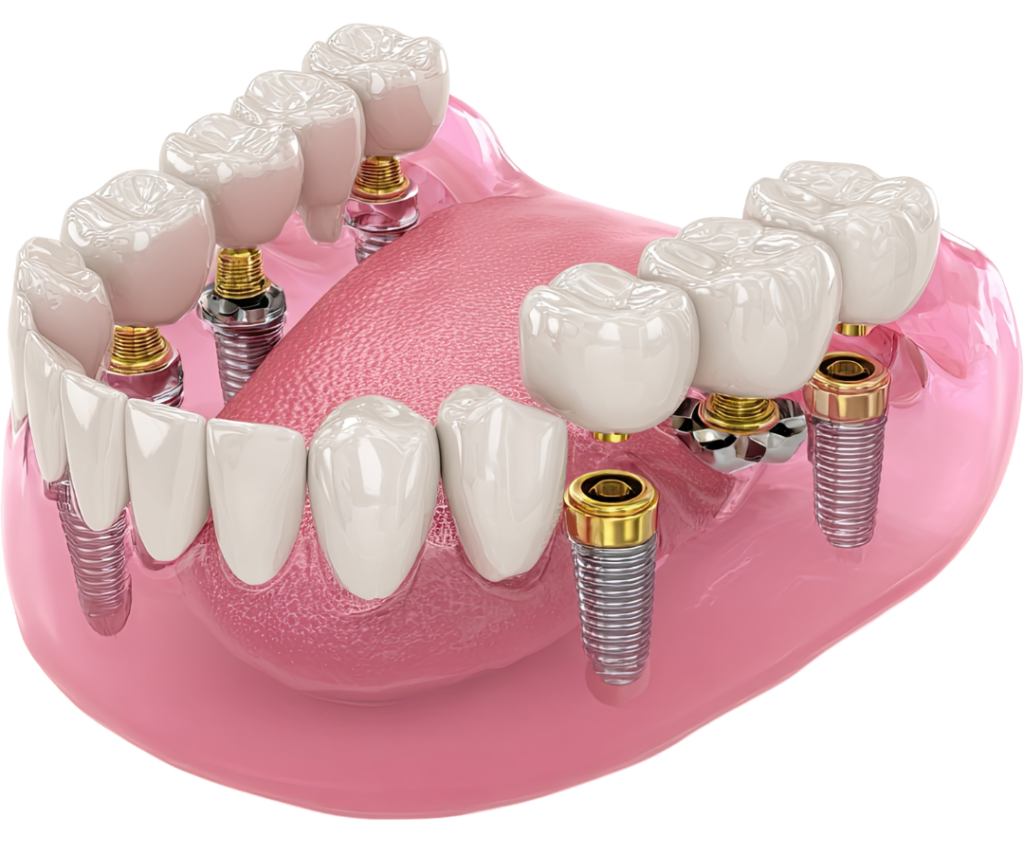
At Manassra Dental, we believe everyone deserves a functional, beautiful smile that lasts a lifetime. For those who have lost most or all of their teeth, traditional dentures can sometimes feel unstable or inconvenient. That is why we offer a revolutionary solution: All on 4 dental implants. This innovative procedure provides a full arch of permanent, natural looking teeth using only four strategically placed implants, giving you the stability and confidence you deserve.
Prevention
Transform Your Life with Bay Area Dental Specialists
When considering a full mouth restoration, you want to work with Bay Area dental specialists who prioritize both precision and aesthetics. At Manassra Dental, we combine years of expertise with cutting edge technology to plan your procedure down to the millimeter. Unlike traditional methods that may require a high volume of implants and extensive bone grafting, the All on 4 technique utilizes the strongest areas of your jawbone. This approach often allows patients to receive a new set of teeth in a much shorter timeframe, restoring your ability to eat, speak, and smile with ease.

Access World Class Care at a Dentist Near Me
Finding a high quality dentist near me in San Jose shouldn’t be a challenge. We have designed our practice to be a local hub for advanced restorative dentistry. Choosing All on 4 implants at Manassra Dental means you are choosing a permanent alternative to removable prosthetics. Because the implants act like natural tooth roots, they stimulate the jawbone and help prevent the facial sagging often associated with tooth loss. We are here to ensure that your transition to a new smile is seamless and life changing.
Simple Tooth Extraction
Gentle Care for Scared Patients Near Me
We recognize that the idea of dental surgery can be intimidating. As a leading dentist for scared patients near me, Manassra Dental creates a compassionate and nonjudgmental environment for every visitor. Our team is highly trained in sedation dentistry and gentle surgical techniques to ensure you remain comfortable throughout your appointment. We take the time to answer every question and address every concern, ensuring you feel safe and relaxed while we work to restore your oral health.
Exceptional Service from a Top Rated Dentist Near Me
When you visit a top rated dentist near me, you expect results that look and feel natural. At Manassra Dental, we custom craft each All on 4 bridge to match your unique facial features and desired tooth shade. Our goal is to create a smile that is virtually indistinguishable from natural teeth. By choosing a high stability, implant supported solution, you eliminate the need for messy adhesives and the worry of teeth slipping while you eat or talk. We take immense pride in seeing the boost in self esteem our patients experience after their final restoration is placed.
Start Your Journey with Oral Exams Near Me
The first step toward a new smile is scheduling oral exams near me at our San Jose office. During your comprehensive consultation, we use 3D digital imaging to assess your bone density and map out the ideal implant placement. These detailed exams are crucial for determining if All on 4 is the right path for you. At Manassra Dental, we don’t just look at your teeth; we look at your overall health to ensure your dental implants have a foundation for long term success.


Comprehensive Toothache Treatment San Jose
If you are currently struggling with failing teeth or severe decay, you may be seeking toothache treatment San Jose. Often, persistent pain is a sign that teeth are no longer viable. While we always try to save natural teeth through root canal therapy, there are times when full mouth extractions followed by All on 4 implants provide a more predictable and pain free future. We are dedicated to removing the source of your discomfort and replacing it with a healthy, vibrant smile that you can be proud of.


The All on 4 Advantage at Manassra Dental
Choosing this procedure offers several key benefits:
- Immediate Results: In many cases, a temporary set of teeth can be placed the same day as your surgery.
- No Bone Grafting: The angled placement of the implants usually eliminates the need for costly bone grafts.
- Easy Maintenance: You clean your implants just like natural teeth—no more soaking dentures overnight.
- Dietary Freedom: Return to eating your favorite foods, from crunchy apples to tough proteins, without hesitation.

Frequently Asked Questions
Should I get All-on-4 dental implants?
All-on-4 or full-mouth dental implants can be an excellent choice at Manassra Dental when traditional dentures or bridgework fit poorly. They are often suitable if you have missing teeth, healthy oral tissues, and a commitment to a healing process that ensures long-term stability.
What are the potential downsides of dental implants?
While generally very safe, dental implants involve a surgical component. At Manassra Dental, we mitigate risks like infection or nerve damage through precise planning. The primary “downside” for most patients is the time commitment, as the bone requires several months to heal and fuse tightly around the new implants.
How painful is the All-on-4 procedure?
During the procedure, your comfort is managed through local anesthesia or sedation options to ensure a pain-free experience. Afterward, it is normal to have some minor swelling or bruising, which the team at Manassra Dental will help you manage with personalized aftercare and pain medication instructions.
What medical conditions qualify me for dental implants?
Ideal candidates at Manassra Dental have healthy oral tissues and a jawbone that has reached full growth. We review your health history to ensure no conditions exist that might hinder bone healing. While tobacco use is discouraged because it can affect success rates, we evaluate every patient on a case-by-case basis.
How long will All-on-4 implants last?
Dental implants are designed to be a lifelong solution. Because the titanium posts fuse with your jawbone, they do not decay like natural teeth. By practicing great oral hygiene and visiting Manassra Dental for regular checkups, your new smile can last for decades.
Contact
Schedule Your All-on-4 Dental Implants Appointment in San Jose Today
Start or continue your oral health journey with Manassra Dental’s expert exams and diagnostic services in San Jose, CA. Whether it’s your first visit or a routine checkup, our team catches problems early, creates personalized treatment plans, and helps keep your smile healthy and beautiful for years.
Call (408) 809-7760 or book your appointment online for a comprehensive, periodic, or limited exam tailored to your needs.
Open Hours
Mon-Fri: 9am to 5pm
Sat: Closed
Sun: Closed
Location
841 Blossom Hill Rd, Suite 202
San Jose, CA 95123