Manassra Dental provides expert endodontic care in San Jose, CA, including root canal treatment, apicoectomy, and pulp therapy. Dr. Ahmed Manassra combines dual dental training with advanced 3D imaging and gentle sedation options to save your natural teeth and relieve pain. Call our Blossom Hill Road office today to schedule your consultation.
Advanced technology and gentle techniques tailored to your unique needs.
Advanced restorative care that rebuilds your smile’s strength, function, and natural beauty.
Gum disease and oral conditions can affect heart health, sleep, and daily energy.
Our team prioritizes comfort while providing safe and effective dental procedures.
Serving patients in San Jose, Los Gatos, and Campbell with compassionate, personalized dental care.
A bad toothache changes everything. That deep, throbbing ache that shoots through your jaw and won’t let you sleep? It’s usually your tooth’s way of screaming for help. The innermost tissue of your tooth has become inflamed or infected, and endodontic treatment is the most reliable way to knock out the pain, clear the infection, and keep your natural tooth right where it belongs.
Here’s what makes our approach different. At Manassra Dental, we handle all of this right here at our San Jose office on 841 Blossom Hill Rd, Suite 202. Root canal therapy, apicoectomy, pulp therapy. All under one roof. No bouncing around to a specialist across town, no extra waiting rooms, no playing phone tag between offices. Just a smoother, more coordinated experience for you and your family.
Dr. Ahmed Manassra brings over 14 years of hands-on clinical experience to every endodontic case he treats. He earned his Doctor of Dental Medicine (DMD) from Tufts University School of Dental Medicine and also holds a Bachelor of Dental Surgery (BDS) from Al-Quds University. That dual education gives him a uniquely deep foundation in both conservative and surgical approaches to saving teeth. And honestly, that depth of training really shows up when a root canal system has tricky anatomy or when a previous treatment didn’t fully solve the problem.
We’ve also invested in technology that genuinely changes outcomes. Our 3D dental imaging (CBCT scans) let us see the full three-dimensional structure of your tooth roots before we ever pick up an instrument. Old-school two-dimensional X-rays? They miss things. Hidden canals, curved roots, hairline fractures. A 3D scan catches what flat images can’t. Pair that diagnostic clarity with our advanced rotary instrumentation, and we can tackle even the toughest cases with real confidence.
Look, we know a lot of people feel genuinely anxious about endodontic procedures. We get it. That’s exactly why we offer nitrous oxide sedation, oral sedation, and IV sedation depending on what you need and how complex the procedure is. Throw in our cozy blankets, pillows, headphones, and an office vibe that actually feels calming, and you’d be surprised how many nervous patients end up telling us it wasn’t nearly as bad as they expected.
One more thing worth mentioning. Our team and Dr. Manassra speak Arabic fluently, so if you’re more comfortable communicating in Arabic, you absolutely can throughout your entire visit. Clear communication during dental work isn’t a luxury. It’s essential. We want every patient to walk out fully understanding their diagnosis, their treatment options, and exactly how to care for themselves afterward.
After a thorough examination and digital X-rays, local anesthesia numbs the area for a painless experience. Sedation options are available before dental treatment for anxious patients.
Dr. Manassra creates a small opening in the crown of the tooth to reach the infected pulp chamber.
Specialized tools remove the infected pulp. The root canals are then cleaned, shaped, and disinfected to eliminate bacteria and prevent future issues.
The cleaned canals are filled with biocompatible gutta-percha and sealed with strong adhesive cement to prevent reinfection.
The tooth is sealed with a temporary or permanent filling. In most cases, a custom dental crown is recommended to strengthen, protect, and restore full function to the treated tooth.
Root canal therapy eases pain, stops infection, and saves your natural tooth. Keeping your tooth helps maintain jawbone health and avoids more invasive treatments like extraction if left untreated.
There’s a reason root canal treatment is the most common endodontic procedure performed worldwide. It works. The American Association of Endodontists puts the success rate at roughly 95%, and it lets you keep your natural tooth instead of pulling it and figuring out a replacement. And despite what you’ve heard, modern root canal therapy is way more comfortable than most people imagine. Especially with the sedation options and gentle techniques we use at our practice.
So how do you know if you need one? Watch for these warning signs: prolonged sensitivity to hot or cold that lingers long after the stimulus is gone, a sudden or severe toothache that seems to come out of nowhere, a tooth that’s darkening or changing color, swelling or tenderness in the gums nearby, or a little pimple-like bump on your gum tissue that won’t go away. These symptoms point to pulp tissue that’s infected or irreversibly inflamed, usually from deep decay, a crack in the tooth, repeated dental work on the same tooth, or some kind of trauma.
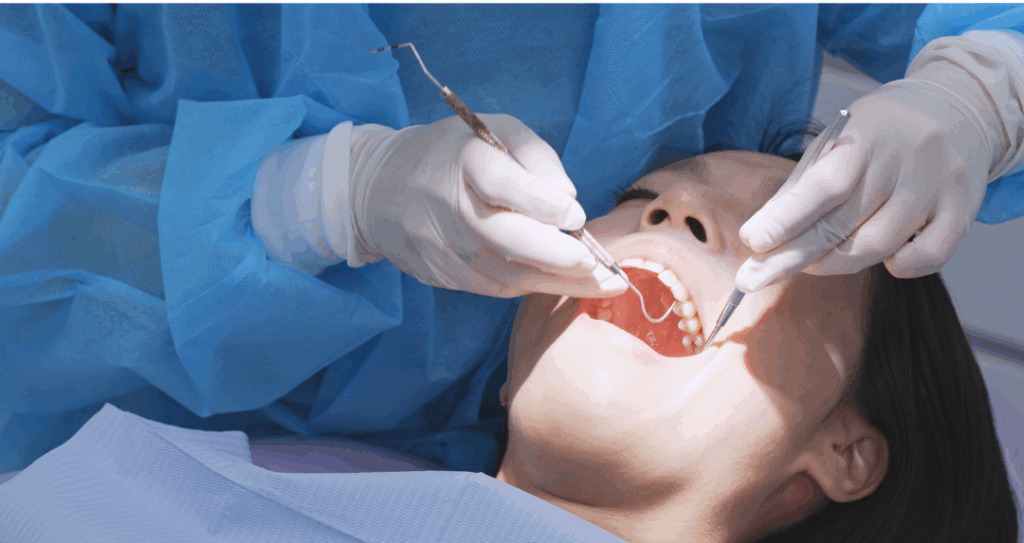
Here’s a walkthrough of what actually happens when you come to our San Jose office for root canal therapy:
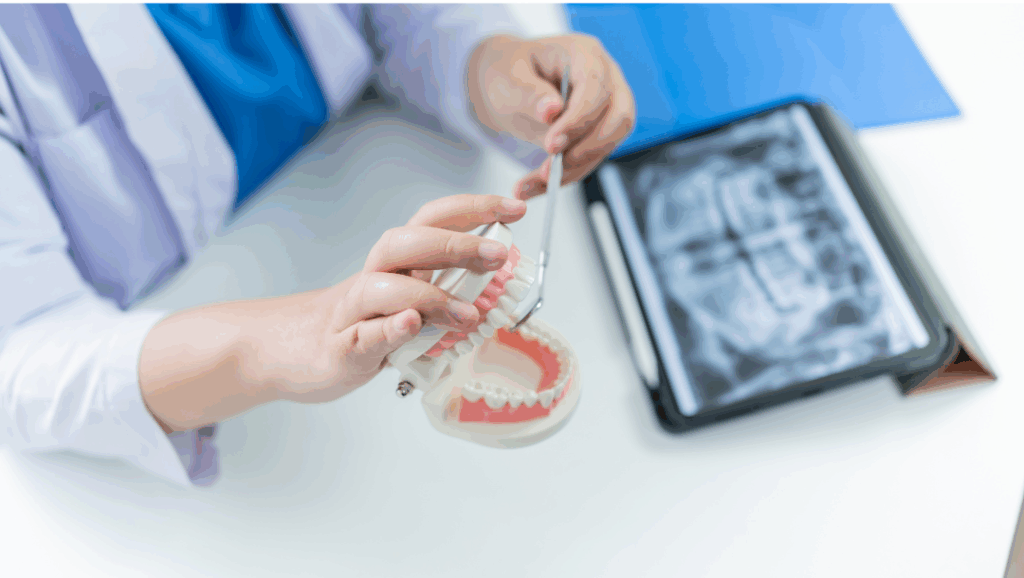
Everything starts with a thorough evaluation. Dr. Manassra reviews your symptoms, examines the affected tooth, and takes diagnostic images. For many cases, we fire up our 3D imaging system to get a detailed look at the root anatomy. This is especially important for molars, which can have four or more canals hiding in there.
Once we’ve got a clear diagnosis, we numb the tooth and surrounding area completely with local anesthesia. If you deal with dental anxiety, we’ll talk through sedation options before anything starts. Lots of our patients go with nitrous oxide because it kicks in fast and wears off quickly. Others prefer oral or IV sedation for a deeper level of relaxation. The thing is, Dr. Manassra never rushes this step. He genuinely believes dentistry shouldn’t feel like an assembly line, and making sure you’re truly comfortable before moving forward is non-negotiable for him.
With the tooth fully numbed, Dr. Manassra creates a small opening through the crown to reach the pulp chamber inside. A rubber dam goes around the tooth to isolate it from the rest of your mouth. This keeps the treatment area dry and free from saliva contamination. Sounds like a small detail, right? It’s actually a critical step that directly impacts both safety and success rates.
That access opening is designed to be as conservative as possible. We preserve as much of your natural tooth structure as we can, because the more tooth you keep, the stronger and more durable the final restoration will be over time.
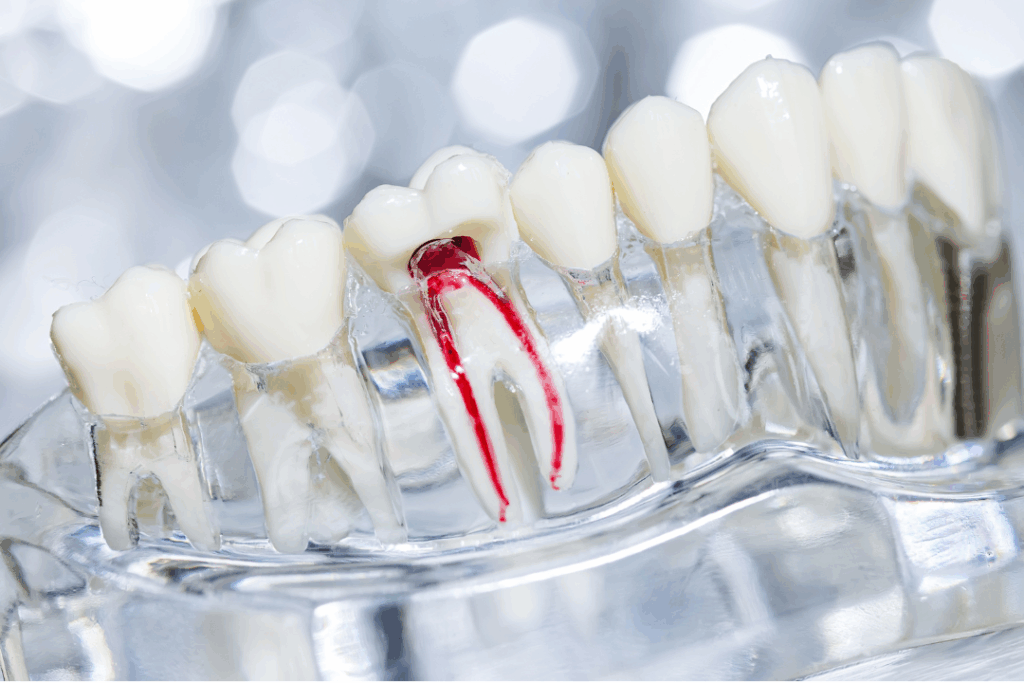
Now comes the core of the procedure. Using specialized endodontic instruments, Dr. Manassra carefully removes the infected or inflamed pulp tissue from the pulp chamber and each root canal. Then every canal gets cleaned, disinfected, and shaped to a precise taper with rotary files. Why does the shaping matter so much? Because it allows the filling material to seal each canal completely in the next step. Without that precise shape, the seal won’t hold.
Throughout this process, we irrigate the canals with antimicrobial solutions that kill bacteria and dissolve any remaining tissue debris. Our meticulous cleaning protocol is honestly one of the biggest reasons our endodontic treatments deliver predictable, long-lasting results.
Once every canal is spotlessly clean and properly shaped, we fill them with a biocompatible material called gutta-percha. It’s a rubber-like substance that conforms to the internal shape of each canal. We place it with a sealer cement to create a three-dimensional seal, and that seal is what keeps bacteria from sneaking back into the canal system down the road.
This part matters more than people realize. A well-sealed root canal is the foundation of the whole treatment’s success. If the seal isn’t complete, bacteria can migrate back into the canal space over time. That leads to reinfection, and potentially retreatment or extraction. Nobody wants that.
After the root canal itself is done, your tooth still needs a permanent restoration to protect it and bring back full function. For back teeth like premolars and molars, we almost always recommend a dental crown. Here’s why: root canal-treated teeth gradually lose some of their natural moisture and can get brittle over time. A crown gives that tooth the structural reinforcement it needs to handle chewing forces for years.
Front teeth with minimal structural damage? A composite filling might be all you need. Dr. Manassra will walk you through the best option for your specific situation. And because we offer a full range of restorative and general dental services right here in our practice, your entire journey from diagnosis through final crown placement happens without outside referrals. That’s a huge convenience most patients really appreciate.
Most people tell us the discomfort after a root canal is mild. Over-the-counter pain medication handles it just fine, and you can usually get back to normal activities the next day. We’ll schedule a follow-up appointment to check on healing and make sure your restoration is working exactly as it should.

Sometimes a standard root canal isn’t enough to fully knock out an infection at the tip of a tooth root. It happens. Maybe the infection persists even after proper root canal therapy. Maybe the root canal system has anatomy so complex it can’t be fully reached from the crown of the tooth. Or maybe a previous root canal needs correction, but retreating it through the crown just isn’t feasible. When you’re facing one of these scenarios, an apicoectomy (also called root-end surgery) becomes the recommended path forward.
So what does that actually involve? It’s a minor surgical procedure where Dr. Manassra makes a small incision in the gum tissue near the affected tooth, removes the very tip (apex) of the root along with any surrounding infected tissue, and places a small filling to seal the end of the root canal. Local anesthesia keeps you comfortable, and sedation options are absolutely available if you need that extra layer of calm.
Our 3D imaging really shines here. The CBCT scan lets Dr. Manassra see the exact location and size of the infection relative to nearby structures like the mental nerve, the maxillary sinus, or adjacent tooth roots. That precise mapping before surgery means less time in the chair, less tissue disruption, and better outcomes overall.
Recovery? Pretty straightforward for most people. Expect some mild swelling and tenderness for a few days. Prescribed medication and cold compresses handle it well. We give you detailed aftercare instructions and schedule follow-up visits to monitor bone healing around the root tip. Full regeneration on imaging usually takes several months, but the discomfort phase is short.
Bottom line: the goal of an apicoectomy is the same goal behind every endodontic treatment we perform. Save your natural tooth. A natural tooth that can be preserved almost always functions better and lasts longer than any artificial replacement out there. Dr. Manassra only recommends this procedure when the clinical evidence clearly supports it as the best option for your oral health.
Pulp therapy covers a group of procedures designed to treat problems with the dental pulp, and it’s especially important for primary (baby) teeth and young permanent teeth that haven’t fully developed yet. At Manassra Dental, we provide pulp therapy for both kids and adults, and we tailor our approach to exactly what each case needs.
For children, pulp therapy usually means one of two things: a pulpotomy or a pulpectomy. A pulpotomy removes only the infected portion of the pulp inside the crown of the tooth while keeping the healthy pulp tissue in the root canals intact. We perform this most often on primary molars hit by deep decay, and it lets the tooth stay in place until it’s naturally ready to come out on its own. Why does that matter? Because baby teeth are space holders. They’re guiding the permanent teeth developing underneath into the right positions. Lose one too early, and you can end up with alignment problems down the line.
A pulpectomy goes further. It removes all of the pulp tissue from both the crown and the roots. Think of it as a root canal for a baby tooth. The canals get cleaned, disinfected, and filled with a resorbable material that dissolves naturally as the primary tooth root resorbs over time. After either procedure, the tooth is typically restored with a stainless steel crown for protection and full function.
For adults and older teens with young permanent teeth, pulp therapy can look a bit different. The focus shifts to preserving pulp vitality whenever possible. Say a tooth has been traumatized or has a small pulp exposure from decay. Techniques like direct pulp capping or partial pulpotomy can sometimes give the pulp a chance to heal and keep doing its job in tooth development. This is especially critical in young permanent teeth where the root hasn’t finished forming yet. A vital pulp is what drives that root to grow to its full length and thickness.
Dr. Manassra approaches pulp therapy with extra care and genuine compassion, particularly with younger patients. Our pediatric dental services include a gentle, reassuring environment with amenities like cozy blankets and headphones so kids can feel safe and comfortable. We also offer habit counseling along with preventive treatments like fluoride applications and dental sealants to protect your child’s teeth from future decay and hopefully avoid the need for more pulp therapy later on.
Whether it’s you or your child who needs endodontic care, our team at Manassra Dental is ready to help. We serve families throughout San Jose, Los Gatos, and Campbell, and we welcome patients of all ages. Dealing with tooth pain? Been told you need a root canal? Have questions about pulp therapy for your little one? Reach out to our office at 841 Blossom Hill Rd, Suite 202, San Jose, CA 95123 to schedule a consultation. Saving your natural teeth is always our first priority, and we’ve got the training, technology, and heart to make it happen.
Dr. Ahmed Manassra combines advanced endodontic techniques with gentle care to ensure your comfort and successful treatment.
Our goal is to save your natural teeth whenever possible to optimize oral health and function.
Digital imaging, precision instruments, and modern anesthesia provide effective, minimally invasive care.
We offer sedation options and detailed aftercare for smooth recovery and positive experiences.
We believe dentistry is not just about treating issues—it’s about building lifelong oral health habits that support your overall wellness.
Most root canal treatments at our San Jose office take between 60 to 90 minutes for a single appointment, depending on the tooth and the complexity of the canal system. Molars with multiple canals may require slightly longer. Dr. Manassra uses 3D imaging and rotary instrumentation to work efficiently while maintaining precision.
Modern root canal treatment is far more comfortable than most patients expect. We use local anesthesia to fully numb the tooth, and we offer nitrous oxide, oral sedation, and IV sedation for patients who experience dental anxiety. Most patients compare the experience to having a filling placed.
A root canal treats infection by accessing the tooth through the crown, removing the pulp, and sealing the canals from the inside. An apicoectomy is a minor surgical procedure that approaches the infection from the root tip through the gum tissue. It is typically recommended when a standard root canal has not fully resolved the infection.
If your child has deep decay or trauma affecting a baby tooth, pulp therapy (pulpotomy or pulpectomy) can save the tooth and maintain proper spacing for the permanent tooth developing underneath. Preserving baby teeth until they are naturally ready to fall out is important for your child’s dental development and alignment.
Manassra Dental offers three levels of sedation: nitrous oxide (laughing gas) for mild relaxation, oral sedation for moderate anxiety, and IV sedation for deeper comfort during more complex procedures. Dr. Manassra will recommend the best option based on your comfort level and treatment needs.
If you are experiencing tooth pain or sensitivity or have been advised to seek root canal treatment, apicoectomy, or pulp therapy, trust Manassra Dental in San Jose, CA, for expert care.
Call us at (408) 809-7760 today to schedule your personalized consultation, or request an appointment online. Dr. Manassra and our caring team look forward to helping you achieve a strong, beautiful smile you’ll love to share.
Mon-Fri: 9am to 5pm
Sat: Closed
Sun: Closed
841 Blossom Hill Rd, Suite 202
San Jose, CA 95123