Digital Dental X-Rays & 3D Dental Imaging in San Jose
The Foundation of Great Dental Care
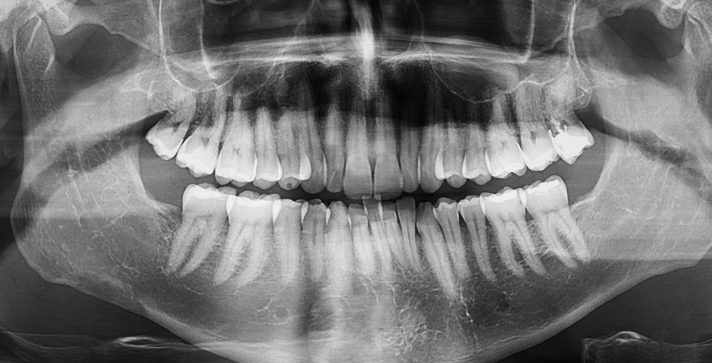
What Dental Imaging Actually Reveals That a Visual Exam Cannot
A visual exam tells us a lot. But it only shows what’s on the surface. The surface is maybe 20% of what’s actually going on in your mouth.
We see this every week. A patient comes in with no pain, nothing looks off, and they’re ready to leave with a clean bill of health. Then we take images. There it is. A cavity forming between two teeth. Bone loss that hasn’t caused symptoms yet. A cyst sitting quietly near a tooth root. None of it visible to the naked eye. All of it treatable because we caught it early.
That’s the point of dental X-ray and 3D dental imaging. Not to find problems you already know about. To find the ones you don’t.
Here’s what imaging actually shows us that a visual exam simply can’t:
- Decay hiding between teeth or under existing fillings
- Bone density changes that signal early gum disease
- Impacted teeth that haven’t broken through yet
- Infections or abscesses forming at the root tip
- Tumors, cysts, or abnormal growths in the jaw
Standard 2D X-rays handle most of this well. 3D dental imaging goes further. It gives us a full picture of your jaw, sinuses, nerve pathways, and bone structure in three dimensions. That matters when we’re planning implants, evaluating wisdom teeth, or looking at anything near a nerve. Flat images can mislead. A 3D scan doesn’t.
People coming from the Willow Glen and Rose Garden neighborhoods of San Jose often arrive after years at a different office, and they’re surprised by what we find. Not because something was missed on purpose. Because the tools weren’t there to see it.
According to the American Dental Association, dental X-rays are one of the most important tools for detecting disease not visible during a clinical exam. That’s just the reality of how teeth and bone work.
You can’t treat what you can’t see. And in our Suite 202 San Jose office, we make sure we can see everything.
The Foundation of Your Dental Care
Digital X-Rays vs. 3D CBCT Imaging: Choosing the Right Tool
Not every patient needs the same view. That’s something we figure out before we ever take a single image.
Digital x-rays are what most people picture when they think about dental imaging. We use them constantly here in San Jose, and they’re great for a lot of situations. Checking for cavities between teeth, looking at bone levels around existing teeth, monitoring a filling that’s been in place for years. Fast, low-radiation, and they show up on screen in seconds. For routine care at our Suite 202 San Jose office, digital x-rays handle most of what we need to see.
But there’s a whole category of problems a flat image just can’t solve.
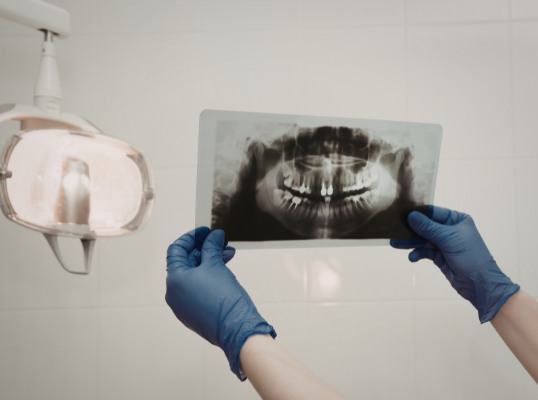
3D dental imaging, specifically cone beam computed tomography (CBCT), gives us a three-dimensional picture of your teeth, jaw, sinuses, and surrounding bone. We see depth. We see angles. We see things that are invisible on a standard x-ray. According to the American Academy of Oral and Maxillofacial Radiology, CBCT imaging provides critical detail for treatment planning that two-dimensional imaging cannot replicate.
Here’s how we actually decide which one to use:
- Digital x-rays for routine exams, cavity checks, and periodic oral examinations
- 3D dental imaging for implant planning, impacted wisdom teeth, or complex extractions
- CBCT when root canal treatment needs more detail than a flat image provides
- 3D imaging for bone grafting or sinus lift planning where precise measurements matter
People coming in from Willow Glen and Almaden Valley sometimes think they need one type of imaging, and the right call turns out to be the other. We don’t default to 3D imaging just because the technology exists. We use it when it changes the treatment plan or reduces your risk.
The radiation dose from a CBCT scan is still low, especially compared to medical CT scans, but it’s higher than a standard digital x-ray. So we’re always asking: does the extra detail justify it for this patient? That answer is clear the moment we review your chart and talk through what’s going on.
Both tools serve a purpose. Knowing which one fits your situation is the skill.
High-Tech Diagnostics in 2026
Radiation Safety for Every Patient, Children, Adults, and Expecting Mothers
We hear this concern almost every day. Someone sits down in the chair and asks, “Is this safe?” And that’s exactly the right question to ask.
The short answer is yes. Let us explain why, because you deserve more than reassurance.
Digital dental x-rays use a fraction of the radiation that older film-based x-rays did. According to the American Dental Association, a full set of digital dental x-rays exposes a patient to roughly the same radiation as a short airplane flight. That’s not a marketing line. That’s the science behind how the technology works now.
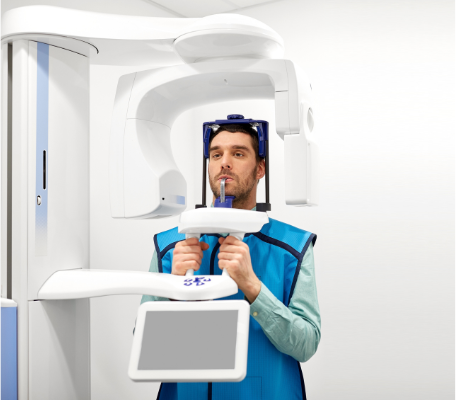
Here in Suite 202 San Jose, we use lead aprons and thyroid collars on every patient. No exceptions. It doesn’t matter if you’re coming in for a single bitewing or a full 3D dental imaging scan. The protective gear goes on before we take a single image.
What About Kids?
Children’s developing tissues are more sensitive to radiation, so we’re careful with our younger patients from neighborhoods like Willow Glen and Almaden Valley. We use the lowest exposure settings possible, and we only take x-rays when there’s a clear clinical reason. We don’t do them on a schedule just to check a box.
What About Pregnant Patients?
This one comes up a lot. If you’re pregnant and need dental x-rays, the standard recommendation from the American College of Obstetricians and Gynecologists is that routine dental care, including x-rays with proper shielding, is safe during pregnancy. We always defer to your OB’s guidance. But we won’t leave you in pain or skip a necessary diagnosis just because you’re expecting.
We cover your abdomen and thyroid every time. Full stop.
For adults with no special concerns, the risk from dental x-rays is low. And skipping them when they’re needed carries its own risk. A missed infection, an undetected fracture, a tumor that could have been caught early. That’s the trade-off nobody talks about.
So when we recommend an x-ray or a 3D dental imaging scan at our Suite 202 San Jose office, it’s because the information we’ll get is worth it. We weigh that every time.
What Happens During Your Imaging Appointment at Our Office
Most people walk in not knowing what to expect. That’s fine. Here’s exactly what happens.
When you arrive at our Suite 202 San Jose office, we’ll get you checked in and walk you back to the imaging area. No long waits. No confusing setup. We do this every day, so we’ve made the whole process pretty smooth for you.
Depending on what your dentist needs to see, you’ll get one of two types of imaging:
- Digital x-rays for a quick look at individual teeth, bone levels, or a specific area of concern
- 3D dental imaging when we need a full picture of your jaw, sinuses, nerve pathways, or implant placement sites
For digital x-rays, we’ll position a small sensor in your mouth and take the images in under a minute. You’ll see them on screen almost instantly. For 3D dental imaging, you’ll stand or sit still while the scanner rotates around your head. The whole scan takes about 20 seconds. No discomfort. Nothing injected. Nothing uncomfortable.
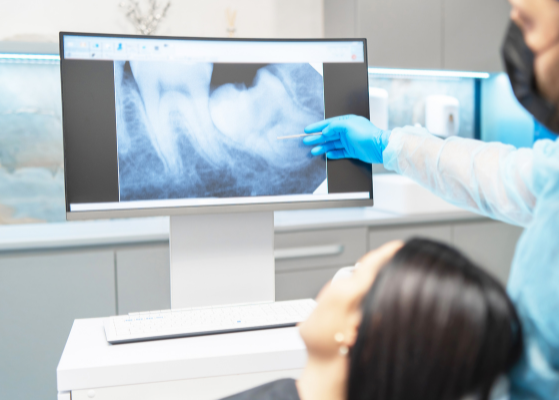
We go through every image with you right there in the chair. We’re not sending you home to wonder what we found. If there’s something worth discussing, like bone loss near a back molar or a shadow around a root, we point it out and explain it in plain language. No jargon.
Folks coming from the Rose Garden area sometimes arrive thinking they need a full 3D scan when a couple of digital x-rays are enough. And sometimes it’s the opposite. We figure that out before we start, not after.
The whole appointment usually runs 20 to 45 minutes depending on what’s needed. And because our team reviews images in-house, you’re not waiting days for results.
Our licensed imaging staff has handled thousands of these appointments. They know what looks normal and what doesn’t, and we’ll never order imaging you don’t need.
How Imaging Connects Directly to Your Treatment Plan
Here’s something we tell patients at our Suite 202 San Jose office all the time: the image isn’t the end of the visit. It’s the beginning of the conversation.
When we take a dental X-ray or run a 3D dental imaging scan, what we’re really doing is building a map. That map changes everything about how we plan your care. We’re not guessing. We’re not going off symptoms alone. We’re looking at exactly what’s happening beneath the surface before we recommend a single thing.
Think about someone who comes in with a dull ache near the back of their jaw. Could be a lot of things. Once we pull up the imaging, we can see whether it’s a cracked root, an infection starting to form, or a wisdom tooth that’s pressing against a neighbor. That distinction matters. A lot. Because the treatment for each of those is different.
Here’s how imaging shapes the decisions we make for you:
- Root canal therapy: we use imaging to confirm infection depth before we start
- Dental implants: 3D dental imaging shows us bone density and nerve location so placement is precise
- Tooth extractions: we need to see root shape and proximity to nerves before removing anything
- Dental crowns and bridges: X-rays confirm the underlying tooth structure can support the restoration
We occasionally see people who visited another provider and were given a treatment recommendation without any imaging to back it up. We get it. But we won’t do that. If we’re recommending something, we want you to see what we see.
According to the American Dental Association, diagnostic imaging is a core part of evidence-based treatment planning. That’s how you avoid unnecessary procedures and catch the right problem the first time.
So when your treatment plan comes with images attached, that’s not us being thorough for the sake of it. That’s us making sure every recommendation has a reason. You deserve to understand why, not just what.
Frequently Asked Questions
What can dental X-rays find that my dentist cannot see during a regular exam?
Dental X-rays reveal decay between teeth, bone loss, infections at the root tip, and cysts that are completely invisible during a visual exam. A visual exam only shows the surface, which is maybe 20% of what is happening in your mouth. We catch problems early this way, before they cause pain or become expensive to fix. Many patients from Willow Glen arrive thinking everything looks fine, then imaging tells a different story.
When does my dentist use 3D imaging instead of a regular digital X-ray?
We use 3D cone beam imaging (CBCT) when a flat image cannot give us the detail we need to make a safe treatment decision. That includes implant planning, impacted wisdom teeth, complex extractions, and anything near a nerve or sinus. Standard digital X-rays handle routine cavity checks and periodic exams just fine. We only recommend 3D imaging at our Suite 202 San Jose office when it actually changes your treatment plan or lowers your risk.
Is dental X-ray radiation safe, and what protection do you use at your Suite 202 San Jose office?
Yes, dental X-rays are safe. Digital X-rays expose you to roughly the same radiation as a short airplane flight, according to the American Dental Association. At our Suite 202 San Jose office, every patient wears a lead apron and thyroid collar before we take a single image. No exceptions. We use the lowest exposure settings possible, especially for children. Skipping necessary X-rays when something is wrong carries a much higher risk than the imaging itself.
Can I get dental X-rays if I am pregnant?
Yes, dental X-rays with proper shielding are considered safe during pregnancy, according to the American College of Obstetricians and Gynecologists. We cover your abdomen and thyroid every time, and we always defer to your OB’s guidance if there are specific concerns. We will not leave you in pain or skip a necessary diagnosis because you are expecting. Your safety and your baby’s safety both matter to us.
How do I prepare for a dental imaging appointment, and what should I bring?
There is nothing special you need to do before a dental X-ray or 3D imaging appointment. Just arrive as you normally would for a dental visit. Bring your insurance card and any prior dental records or imaging from a previous office if you have them. Having old X-rays helps us compare changes over time. If you are coming to our office from neighborhoods like Rose Garden or Almaden Valley, plan a few extra minutes for parking near the building.
How long does a 3D dental imaging scan take, and when will I know the results?
A 3D CBCT scan typically takes under two minutes to complete. The images appear on screen almost immediately. Your dentist will review them with you the same day in most cases, walking you through exactly what the scan shows. There is no waiting days for results like you might expect from a medical imaging center. We use the scan right away to plan your next steps, so you leave knowing what is going on and what comes next.
Contact
Schedule Your Digital Dental X-Ray in San Jose Today
Start or continue your oral health journey with Manassra Dental’s expert exams and diagnostic services in San Jose, CA. Whether it’s your first visit or a routine checkup, our team catches problems early, creates personalized treatment plans, and helps keep your smile healthy and beautiful for years.
Call (408) 809-7760 or book your appointment online for a comprehensive, periodic, or limited exam tailored to your needs.
Open Hours
Mon-Fri: 9am to 5pm
Sat: Closed
Sun: Closed
Location
841 Blossom Hill Rd, Suite 202
San Jose, CA 95123