
Oral Cancer Screening in San Jose, CA

The Foundation of Great Dental Care
What Oral Cancer Screening Actually Involves
Most people come in expecting something complicated. It’s not. Oral cancer screening is one of the faster parts of your exam at our San Jose office in Suite 202.
Here’s what actually happens during the screening:
- We look at your lips, gums, tongue, and the inside of your cheeks for anything unusual.
- We check under your tongue and the floor of your mouth, spots most people never think about.
- We feel along your jaw and neck for swollen lymph nodes or lumps.
- We look at the back of your throat and soft palate.
- We ask you a few questions about tobacco use, alcohol, and any symptoms you’ve noticed.
We’re looking for red patches, white patches, sores that haven’t healed, or tissue that feels different than it should. Most of the time, we find nothing. And that’s exactly what we want. When something does show up early, the difference in outcomes is dramatic. According to the American Cancer Society, oral cancers caught at an early stage have a survival rate above 80 percent. Caught late, that number drops.
We see patients come in from the Willow Glen area who’ve had a sore on the side of their tongue for three weeks and just figured it would go away. Sometimes it does. Sometimes it doesn’t. We’d rather know.
No, it doesn’t hurt. There’s no needle. No special prep. You just open your mouth and let us do our job.
Some offices use additional tools like a special light or dye to highlight suspicious tissue. We’ll let you know if we think that’s useful in your case. But the visual and physical exam is the foundation, and it’s what every good screening starts with.
If we do spot something that needs a closer look, we don’t leave you hanging. We’ll talk through next steps right there in the chair, whether that means monitoring it, ordering an oral pathology biopsy, or referring you to a specialist who can dig deeper.
The Foundation of Your Dental Care
Who Should Schedule a Screening and When
Most people who need an oral cancer screening don’t know they need one.
The short answer is this: if you’re an adult, you should be getting screened. But there are people in San Jose who carry a higher risk and really can’t afford to wait on this.
Here’s who we see most often and who we’d push hardest to come in:
- Adults 40 and older, especially men, where rates climb sharply
- Tobacco users of any kind, cigarettes, cigars, chewing tobacco, vaping
- People who drink alcohol regularly, especially combined with tobacco use
- Anyone with a history of HPV, which is now linked to a rising number of throat and oral cancers
- People who’ve had previous oral lesions, abnormal patches, or a prior cancer diagnosis
According to the American Cancer Society, oral cancer is more than twice as common in men as in women. Survival rates drop when it’s caught late. We see this reality play out, and it’s why we don’t treat screening as optional for higher-risk patients.
So when should you come in? Once a year, minimum. If you’re higher risk, twice a year makes sense. We build oral cancer screening into your periodic oral examination visits at our Suite 202 location in San Jose, so you don’t have to schedule a separate appointment just for this.
Here in the Willow Glen area, we get a lot of patients who haven’t had a screening in years, sometimes ever. They come in for a dental cleaning or a routine dental exam and cleaning, and we catch something that nobody’s looked for before. That’s not rare. We see it more than people think.
Even if you’re young, don’t smoke, and feel completely fine, come in. Early-stage lesions don’t hurt. They don’t look dramatic. You won’t know something’s wrong until someone trained to find it actually looks. That’s exactly what we do.
Need to get on the schedule? Give us a call and we’ll find a time that works.
High-Tech Diagnostics in 2026
Step-by-Step: What Happens During Your Appointment
A lot of patients come in not knowing what to expect. That’s completely fine. The oral cancer screening appointment is straightforward. It takes about 10 minutes, and there’s nothing painful about it.
Here’s exactly what we do, in order:
- We review your health history. Before we touch anything, we ask about tobacco use, alcohol habits, and any symptoms you’ve noticed. Soreness that won’t go away. A patch that showed up and stayed. These details matter more than most people realize.
- We examine the outside first. We check your face, neck, and jaw. We’re feeling for lumps or swollen lymph nodes. Most patients in the Willow Glen area don’t expect us to check the neck, but that’s where early signs sometimes show up.
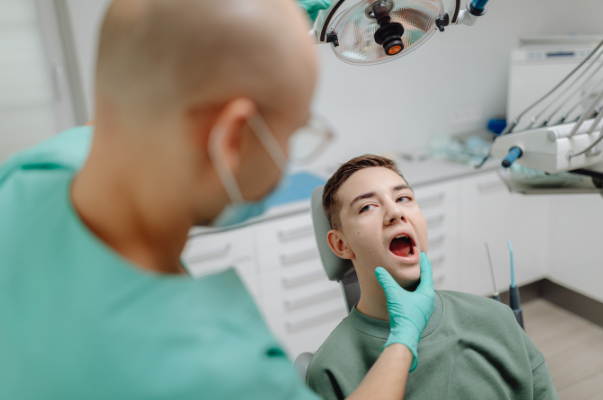
- We move inside the mouth. Lips, cheeks, gums, the roof of your mouth, under your tongue. We use a light and a mirror. We’re looking for red patches, white patches, sores, or anything that looks different from the tissue around it.
- We check the tongue thoroughly. The sides and the bottom of the tongue are high-risk spots. We hold the tongue and look at angles most people never see on their own.
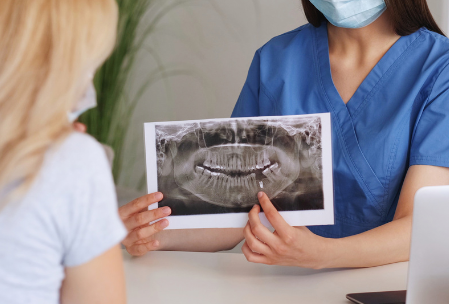
- We tell you what we found, right then. No waiting. If everything looks normal, we say so. If something needs a closer look, we explain what it is and what the next step would be.
We do this at every appointment at our Suite 202 office. It’s built into your routine exam, not an add-on.
According to the American Cancer Society, oral cancers found early have a survival rate above 80 percent. That number drops fast when it’s caught late. So we don’t skip this step, and we don’t rush it.
Most people feel nothing during the exam. No discomfort. No tools that feel strange. You’re just sitting in the chair while we take a careful look at tissue most people never think about.
Simple process. Big difference.
What Happens If Something Suspicious Is Found
Most of the time, everything looks fine. But sometimes we find something that needs a closer look, and we want you to know exactly what that means before it happens to you.
Finding something suspicious doesn’t mean you have cancer. What it means is that we saw a spot, a patch, or a texture change that doesn’t fit the normal pattern. We see this every week, and the overwhelming majority of findings turn out to be nothing serious at all.
Here’s what the follow-up process actually looks like at our San Jose practice:
- We document the area with photos and detailed notes so we have a baseline to compare against.
- We may ask you to come back in two to three weeks. Some spots resolve on their own once an irritant is removed.
- If the spot doesn’t change or looks concerning, we refer you for an oral pathology biopsy. That’s the definitive answer.
- A specialist examines the tissue sample under a microscope and sends back a report.
- We review the results with you and talk through next steps, whatever those turn out to be.
The biopsy is the part people worry about most. But it’s a minor procedure. A small tissue sample. Local anesthetic. Done in one appointment.
What actually matters here is timing. According to the Oral Cancer Foundation, oral cancer caught at an early stage has a survival rate above 80 percent. Caught late, that number drops. That’s why we screen in the first place.
Patients in the Willow Glen and Rose Garden areas sometimes come in after ignoring a sore for months because they assumed it was a canker sore or something minor. Sometimes it is. But sometimes waiting costs you options you could’ve had.
That’s the whole point of catching it early. More options. Less treatment. Better outcomes.
We won’t leave you guessing about what we found or what to do next. You’ll know what we saw, why it matters, and exactly what the next step is before you leave the chair.
How Often to Get Screened Based on Your Risk Level
Not everyone needs oral cancer screening on the same schedule. That’s just the reality of it.
For most healthy adults with no risk factors, once a year is enough. We build it right into your routine dental exam and cleaning here in San Jose, so you don’t even have to think about scheduling it separately. You come in, we check, you leave knowing you’re clear.
But some patients need to come in more often. We see this every week, someone who didn’t realize their habits or health history put them in a higher-risk category. Here’s what actually moves you into that group:
- Tobacco use in any form, including smokeless tobacco and vaping
- Heavy or frequent alcohol use
- A previous oral cancer diagnosis or precancerous lesion
- HPV history, specifically HPV-16
- Prolonged sun exposure, which raises lip cancer risk
If any of those apply to you, we’re typically going to recommend screening every six months. Some patients with a prior diagnosis come in even more frequently. According to the American Cancer Society, roughly 54,000 people are diagnosed with oral or oropharyngeal cancer each year in the United States, and survival rates drop sharply when it’s caught late. Coming in twice a year costs you nothing but a few extra minutes.
Patients in the Willow Glen and Rose Garden neighborhoods near our San Jose office often ask if they really need to come back if nothing looked off last time. The answer is yes. Tissue changes fast, and some lesions develop between annual visits.
Age matters too. Once you’re past 40, your baseline risk goes up regardless of lifestyle. We factor that in when we talk through your schedule with you.
Not sure which category you fall into? That’s a common question. Come in and we’ll walk through your history together, figure out what makes sense for you, and put a realistic plan in place. No guessing.
Frequently Asked Questions
What actually happens during an oral cancer screening at your Suite 202 San Jose office?
The screening takes about five to ten minutes and fits right into your regular exam. We check your lips, gums, tongue, cheeks, and the floor of your mouth. We also feel along your jaw and neck for swollen lymph nodes. There are no needles and no special prep needed. You just open your mouth and we do the work. Most patients are surprised by how quick and painless it is.
How often should I get screened for oral cancer in San Jose?
Once a year is the minimum for most adults. If you use tobacco, drink alcohol regularly, or have a history of HPV, twice a year makes more sense. We build the screening into your routine exam at our Suite 202 location, so you do not need a separate appointment. Many patients from the Willow Glen area come in for a cleaning and find out they have never had a proper screening before. That is more common than most people think.
What happens if you find something suspicious during my screening?
We tell you right away, while you are still in the chair. We do not leave you guessing. Depending on what we see, we may monitor it at your next visit, order an oral pathology biopsy, or refer you to a specialist. Finding something early matters a lot. According to the American Cancer Society, oral cancers caught at an early stage have a survival rate above 80 percent. Caught late, that number drops significantly.
Do I need to do anything to prepare before my appointment?
No special preparation is needed before your screening. Just come in as you normally would for a dental visit. It helps to tell us about any sores, patches, or soreness you have noticed, even if they seem minor. A sore on the side of your tongue that has lasted three weeks is worth mentioning. We ask a few questions about tobacco use and alcohol before we start, so think about that ahead of time if you can.
Who is most at risk and should not skip this screening?
Adults 40 and older, tobacco users, and people who drink alcohol regularly carry the highest risk. HPV is now linked to a rising number of oral and throat cancers, so that history matters too. Men are more than twice as likely to develop oral cancer as women, according to the American Cancer Society. Even if you feel fine and have no symptoms, early-stage lesions usually do not hurt. You will not know something is there until someone trained to find it actually looks.
Is parking easy to find near your San Jose office in Suite 202?
Yes, parking is available near our Suite 202 location in San Jose. We recommend arriving a few minutes early if it is your first visit, just to get settled before your appointment. If you have questions about getting here, give us a call and we will point you in the right direction. We want the visit to be as easy as possible from the moment you leave your house.
Contact
Schedule Your Oral Cancer Screening in San Jose Today
Start or continue your oral health journey with Manassra Dental’s expert exams and diagnostic services in San Jose, CA. Whether it’s your first visit or a routine checkup, our team catches problems early, creates personalized treatment plans, and helps keep your smile healthy and beautiful for years.
Call (408) 809-7760 or book your appointment online for a comprehensive, periodic, or limited exam tailored to your needs.
Open Hours
Mon-Fri: 9am to 5pm
Sat: Closed
Sun: Closed
Location
841 Blossom Hill Rd, Suite 202
San Jose, CA 95123