Services
Dental Implants Provider
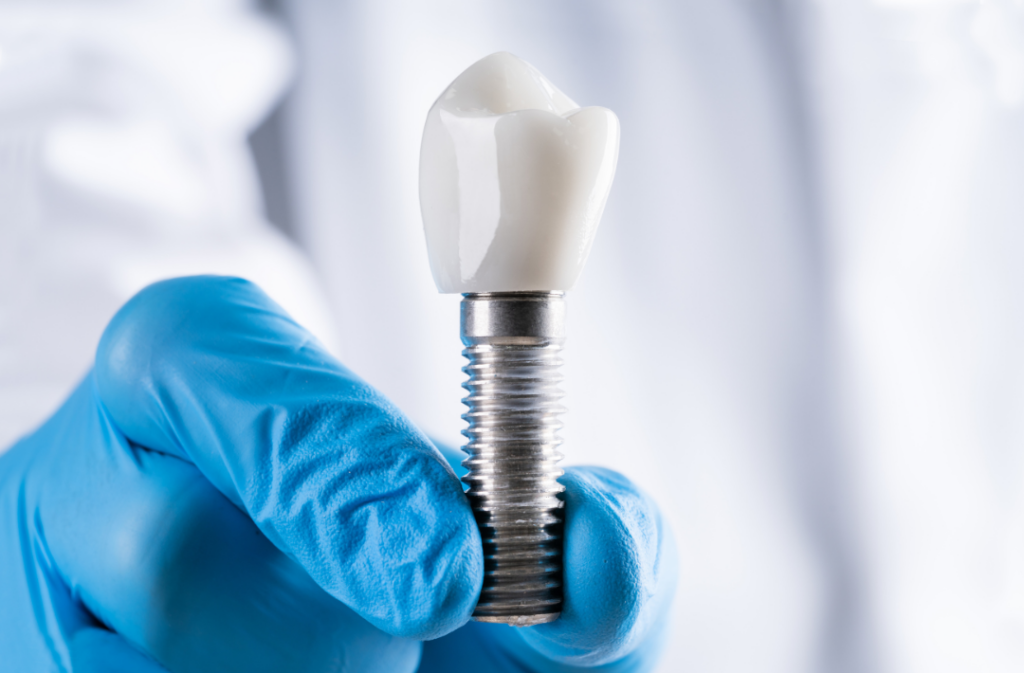
Dental Implants in San Jose, CA
Your Options at Manassra Dental
The right dental implant option depends on two things: how many teeth you’re missing and how healthy your jawbone is. Manassra Dental explains each implant and tooth replacement service in plain terms, so you can see where you fit before you book. When you’re ready, call us to set up a consultation.
If you’re missing teeth in San Jose, you’ve probably seen implants, All-on-4, and implant-supported dentures used as if they mean the same thing. They don’t. As a dental implants provider on Blossom Hill Rd, we help patients from San Jose, Los Gatos, and Campbell figure out which option fits them.
Dentures
Custom-crafted removable appliances designed to replace multiple or full arches of missing teeth, restoring everyday chewing function and facial volume.
Dental Implants
Long-lasting restorative titanium fixtures surgically integrated into the jawbone to anchor custom crowns and mimic natural tooth roots.
Implant-Supported Dentures
Hybrid restorative prosthetics securely anchored onto dental implants to eliminate slipping and provide superior biting stability.
All-on-4 Implants
A full-arch rehabilitation technique that uses four strategically positioned implants to permanently support an entire set of fixed replacement teeth.
Tooth Replacement Options
A comprehensive range of prosthetic and implant-based solutions tailored to restore complete dental function, aesthetic balance, and natural bite strength.
Full Mouth Reconstruction
A comprehensive, multi-disciplinary treatment plan combining restorative, cosmetic, and neuromuscular procedures to rebuild the function, health, and appearance of an entire smile.
Why Choose Manassra Dental for Dental Implants?
Expertise
Dr. Ahmed Manassra combines dental expertise with a gentle, personalized approach that prioritizes patient comfort.
Comprehensive Care
Our exams detect potential problems early and prevent them through proactive intervention and personalized treatment planning.
Cutting-Edge Technology
With digital X-rays and 3D imaging, we utilize the latest dental technologies to provide precise, minimally invasive diagnostics.
Patient-Centered Experience
We create a relaxing, supportive environment where you are fully informed and comfortable throughout your visits.
Long-Term Wellness Focus
We believe dentistry is not just about treating issues—it’s about building lifelong oral health habits that support your overall wellness.
Dental Implants Replace Single or Multiple Missing Teeth
Maybe you lost a back molar to a cracked filling years ago. Maybe a front tooth took a hit during a pickup game. Either way, there’s a gap, and you’re tired of chewing on one side.
A dental implant fills that gap one tooth at a time. We place a small titanium post in your jawbone. Over a few months, the bone heals around the post and holds it firmly in place. Then we top it with a crown that’s shaped and shaded to match the teeth beside it. It looks like a natural tooth, and you can bite and brush like normal.
Dental implants are for people missing one tooth or a few. That’s the big difference from implant-supported dentures, which replace a full arch of teeth on a small number of implants. If you’ve still got most of your own teeth, a dental implant is usually the place to start.
We use 3D imaging to plan where each dental implant goes, so the post sits where your bone is strongest. Not sure your bone is strong enough? We’ll check, and there are ways to build it up.
All-on-4 Implants Rebuild a Full Arch With Four Anchors
All-on-4 implants replace a whole arch of teeth using four implants. That’s it. Four posts are placed at set angles in your upper or lower jaw, and a full row of new teeth is fixed on top.
This option is for people missing most or all of their teeth in one arch. It also fits people whose remaining teeth are failing and can’t be saved. The new teeth are fixed in place. You don’t take them out at night, and you brush them much like you’d brush natural teeth.
Here’s how All-on-4 implants differ from implant-supported dentures. Implant-supported dentures can use different numbers of implants, and they’re often removable. All-on-4 implants follow a fixed protocol of four implants per arch, and the teeth stay put.
Because the implants are angled to use the strongest parts of your jaw, many patients can skip extra bone-building steps. All-on-4 treatment also often takes fewer visits than placing many single implants across an arch. For a lot of people, that’s a real relief.
Find out if you’re a good fit on our All-on-4 Implants page.

Implant-Supported Dentures Secure a Removable Full Arch

Do your dentures slide when you laugh? Do you skip foods you love because your dentures might shift?
Implant-supported dentures fix that problem. We place a small number of implants in your jaw. Your denture then snaps onto those implants, so it stays in place while you eat and talk. You can still take it out to clean it, which some people really like.
The difference from traditional dentures is simple. Traditional dentures rest on your gums and stay in with suction or adhesive. Implant-supported dentures attach to implants. That gives you a firmer bite and fewer sore spots from rubbing.
This is one of the more underrated options in implant care. It sits right between a regular denture and a fixed arch like All-on-4. If you already wear dentures and you’re frustrated, implant-supported dentures are often the most natural next step.
Dentures Replace Teeth Without Surgery
Unlike implant-supported dentures, traditional dentures don’t rely on implants at all. They’re fully removable, and you don’t need surgery to get them. For some people, that’s exactly what they want right now.
We offer two main types of dentures:
- Full dentures replace every tooth in an upper or lower arch.
- Partial dentures fill gaps when you still have some healthy natural teeth.
- Both are custom-made to fit your mouth and match your smile.
Dentures can be a good fit if you’d rather avoid surgery or you’re not ready for implants yet. They help you chew, speak clearly, and smile with confidence again.
There’s no wrong answer here. Some patients start with dentures and talk about implants later. Others stay with dentures for good. We’ll explain how dentures and implant options compare for your mouth, then let you decide at your own pace.
Learn more about full and partial options on our Dentures (Full and Partial page.
Bone Grafting Prepares the Jaw for Implant Placement
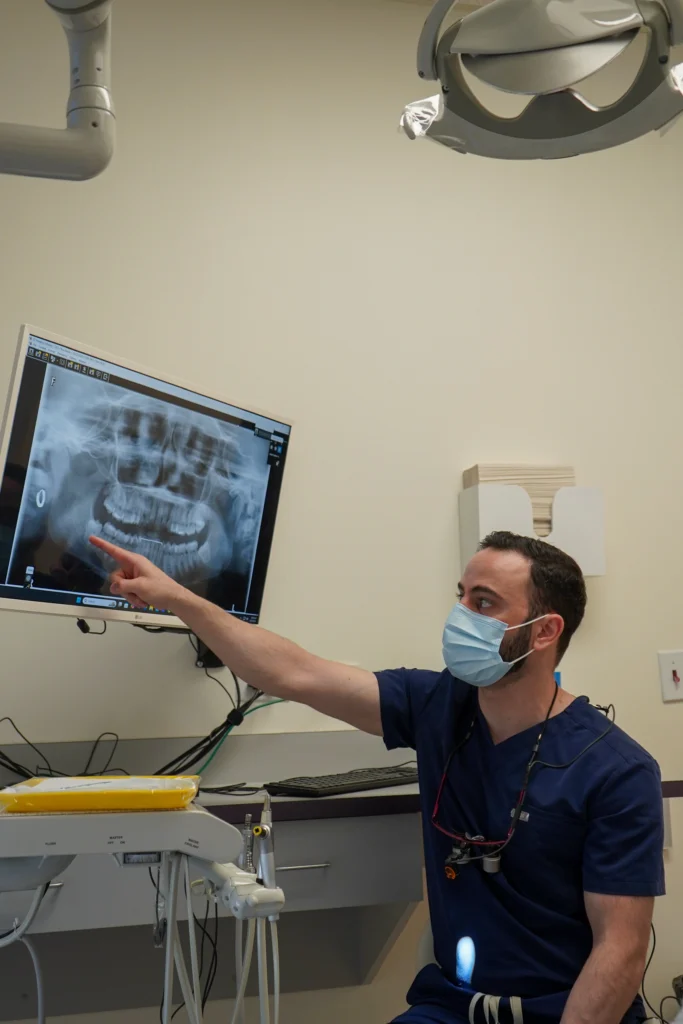
A lot of people think bone loss rules them out for implants. It usually doesn’t.
Bone grafting adds graft material to your jaw so there’s enough bone to hold an implant. Over time, your body builds new bones around the graft. Once it’s healed, we can place the implant in a solid, stable bone.
Your jaw can lose bone for a few common reasons:
- A tooth has been missing for a long time
- Gum disease has worn away bone around your teeth
- An old injury or infection damaged the area
- Wearing dentures for years has let the ridge shrink
Bone grafting can treat bone loss anywhere along your jaw ridge, upper or lower. That’s different from a sinus lift, which only treats the upper back jaw near your sinuses. Your 3D scan shows us exactly where the bone is thin.
Sinus Lift Creates Room for Upper Jaw Implants
Your upper back teeth sit right below your sinuses. When those teeth go missing, the bone there can thin out. The sinus may also dip lower over time. That leaves too little bone to hold an implant.
A sinus lift solves this. We gently raise the floor of the sinus and place graft material in the space underneath. As it heals, new bone forms. Then there’s enough height and depth for a dental implant in the upper back jaw.
A sinus lift isn’t the same as general bone grafting. Bone grafting can be done anywhere along the jaw. A sinus lift is a specific procedure for one area only – the upper jaw near the sinus cavity. If you need implants for upper molars or premolars, this is the one to ask about.
It sounds like a big deal, but most patients find it easier than they expected. We’ll explain every step and give you clear aftercare tips so healing goes smoothly.

Tooth Extractions Clear the Way for Implant Treatment

Implant care often begins with letting go of a tooth that can’t be saved. It might be cracked down to the root, badly decayed, or loose from gum disease.
Tooth extractions remove that failing tooth so you can move forward. We numb the area well and take our time. If the tooth is easy to reach, it’s a simple extraction. If it’s broken below the gumline, we may need a surgical extraction instead.
After the tooth is out, we prepare the socket. Sometimes we can place an implant the same day. Other times, the area needs to heal first, or it needs a bone graft. Your bone and gum health decide which path makes sense.
Tooth extractions can apply to any visible, erupted tooth in your mouth. That’s what sets them apart from wisdom teeth removal, which only deals with third molars. If you’re planning an implant, think of the extraction as step one, not a separate problem.
Learn how we handle each case on our Tooth Extractions page.
Wisdom Teeth Removal Addresses Impacted or Painful Molars
The pain in the back of your jaw that comes and goes is a classic wisdom tooth sign. These third molars often don’t have room to come in straight. Some get stuck in the bone or gum, which we call impacted.
You might need wisdom teeth removal if you notice:
- Ongoing pain or pressure in the back of your mouth
- Swollen or tender gums around a back tooth
- Crowding or shifting of nearby teeth
- A bad taste or signs of infection
Wisdom teeth removal focuses only on third molars. That’s the difference from general tooth extractions, which can involve any erupted tooth. Wisdom teeth often need surgical access, especially when they’re impacted.
Why does this matter for implant patients? A problem wisdom tooth can damage the molar next to it. Taking it out early helps protect those neighbors, so you’re less likely to need an implant there later.
See how we keep it gentle on our Wisdom Teeth Removal page.

IV Sedation Keeps Patients Comfortable During Implant Surgery

Some people feel nervous just thinking about the dental chair. That’s okay. Needing extra comfort isn’t something to be embarrassed about.
IV sedation sends calming medicine through a small IV line in your arm or hand. You stay relaxed the whole time, and many patients remember very little of the visit afterward. It’s a great fit for longer implant procedures, like All-on-4 implants or full mouth reconstruction.
We also offer oral sedation and nitrous oxide sedation. Those are lighter options. IV sedation gives a deeper level of relaxation, so it’s often the better choice for more involved implant surgery or for patients with strong dental anxiety.
Comfort doesn’t stop at sedation. Our chairs come with cozy blankets, pillows, and headphones, so you can settle in. We’ll talk through your options ahead of time and help you pick what feels right.
Learn more on our IV Sedation page.

Frequently Asked Questions
How do I know if I need a single dental implant or All-on-4 implants?
It depends on how many teeth you’re missing. If you have one tooth or a few gaps and most of your natural teeth are healthy, a single dental implant usually works best. If you’re missing most or all teeth in an arch, All-on-4 implants replace the whole row using just four posts. We can tell you which fits during a consultation at our Blossom Hill Rd office.
What's the difference between implant-supported dentures and regular dentures?
Regular dentures rest on your gums and stay in with suction or adhesive. Implant-supported dentures attach to a small number of implants in your jaw, so they stay firm while you eat and talk. You can still remove them for cleaning. If your current dentures slip or slide, implant-supported dentures are often the next step up.
Do I need enough jawbone for dental implants, and what if I don't have it?
Yes, your jawbone needs enough strength and volume to hold an implant securely. We use 3D imaging at our San Jose office to check your bone before recommending a plan. If your bone is thin, there are ways to build it up first, so don’t rule out implants before talking with us.
How do I choose between traditional dentures and dental implants?
It comes down to whether you want surgery and how soon you need results. Traditional dentures need no surgery and work right away, while implants take longer but give you a firmer, more permanent bite. Some San Jose patients start with dentures and move to implants later. We’ll walk through both so you can decide at your own pace.
Do you serve patients outside San Jose, like Los Gatos or Campbell?
Yes, we treat patients from San Jose, Los Gatos, and Campbell at our Blossom Hill Rd location. Many neighbors in these areas choose us for implant consultations and full-arch options like All-on-4. Call us to set up a visit no matter which of these communities you’re coming from.
When should I consider full mouth reconstruction instead of just implants?
Full mouth reconstruction makes sense when you have more than one issue at once, like missing teeth, damaged teeth, and a bite that’s out of alignment. Fixing just one problem won’t solve the others. Dr. Manassra can combine implants with restorative care in one coordinated plan during your consultation.
Contact
Schedule Your Professional Dental Cleaning in San Jose Today
Start or continue your oral health journey with Manassra Dental’s expert exams and diagnostic services in San Jose, CA. Whether it’s your first visit or a routine checkup, our team catches problems early, creates personalized treatment plans, and helps keep your smile healthy and beautiful for years.
Call (408) 809-7760 or book your appointment online for a comprehensive, periodic, or limited exam tailored to your needs.
Open Hours
Mon-Fri: 9am to 5pm
Sat: Closed
Sun: Closed
Location
841 Blossom Hill Rd, Suite 202
San Jose, CA 95123